
Almost embarrassingly earnest
Japanese pastry flour, French cultured butter, real dairy cream — we spend a slightly awkward amount of money on ingredients.
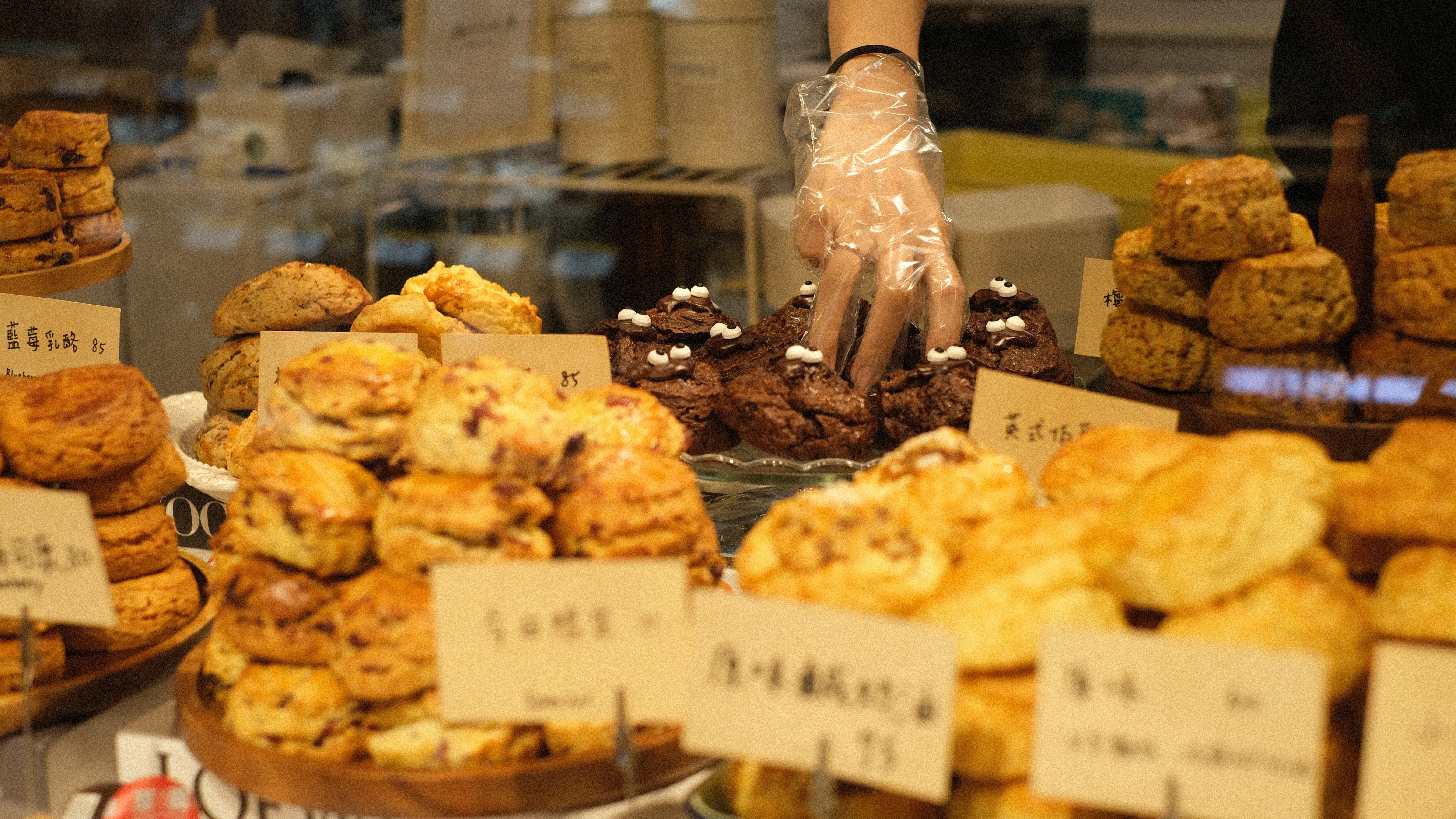
Classic staples × weekly drops
We've created more than 30 flavors, but they never show up all at once — the classics stay, while the rest rotate in weekly. It's not scarcity marketing; it's the honest capacity of a kitchen that wants every batch done right. The flavor you missed this week is your reason to come back next week.
- The classics
- Original, chocolate, matcha, taro, red bean, cranberry — always around, always safe to order on a first date with us.
- Weekly drops
- Seasonal and mood-driven flavors, announced weekly on Instagram. Miss one, and you'll have to wait for its next appearance.
- Oops Lab
- Experimental flavors, usually sold for a single weekend. "This flavor is a bit odd, but we thought about it for a very long time."
- The Question Mark Croissant
- Our other signature — a croissant bent into the shape of a question mark. It's a pastry, and also our brand symbol in 3D.
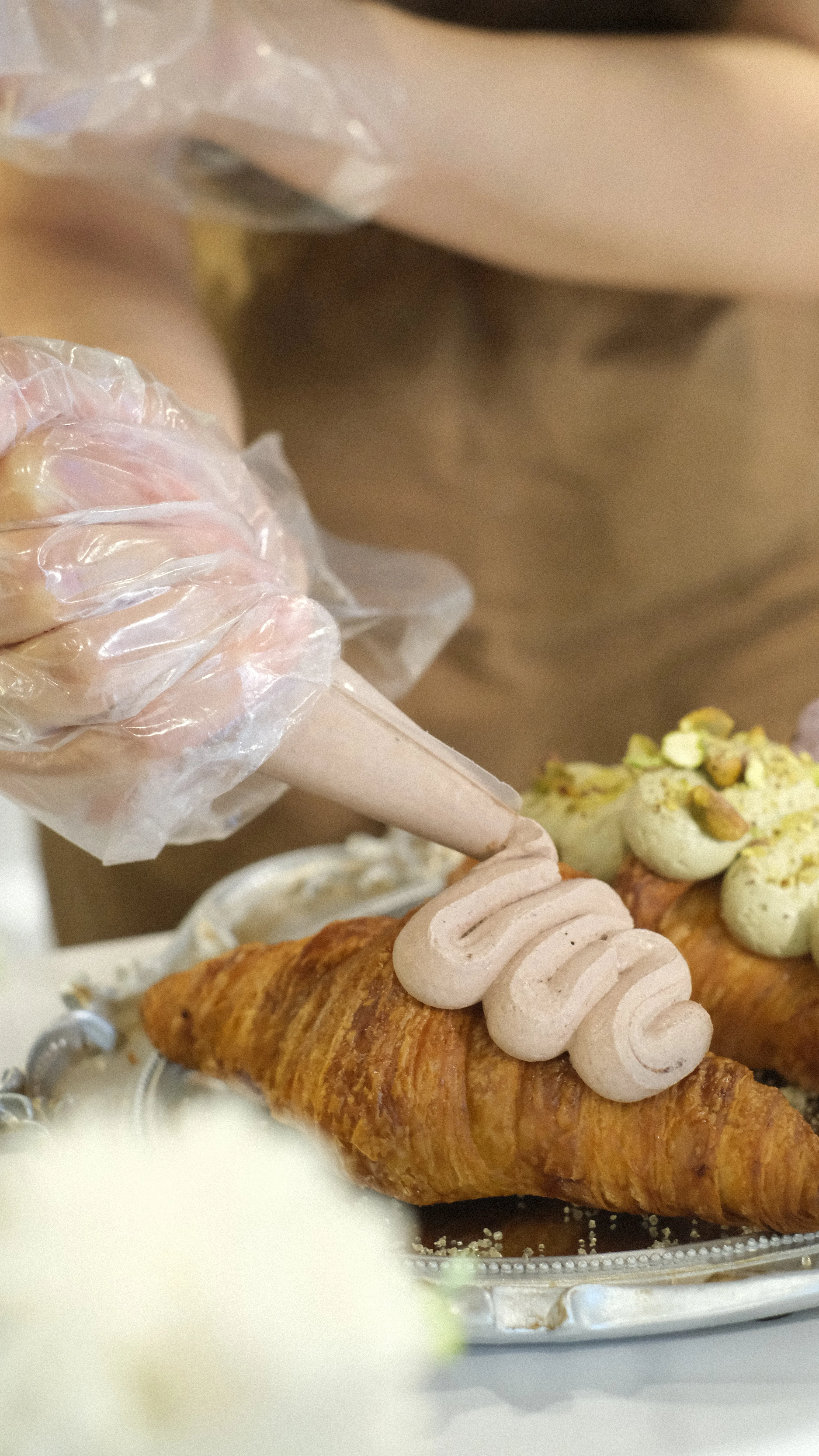
Baked fresh every morning
in our central kitchen
From weighing to shaping to the oven, every batch keeps a full production record. Yes, we're aware that's a bit much.
How to open a scone, properly
-
Reheat for three minutes
150°C in the oven for 3–5 minutes. Crisp outside, warm inside — the butter will introduce itself.
-
Break it by hand
No knives. Split it along the waistline with your hands — a rough edge is what a scone should look like.
-
Pass it to the person next to you
In awkward moments, offer a scone before you speak. That's what we designed it for.